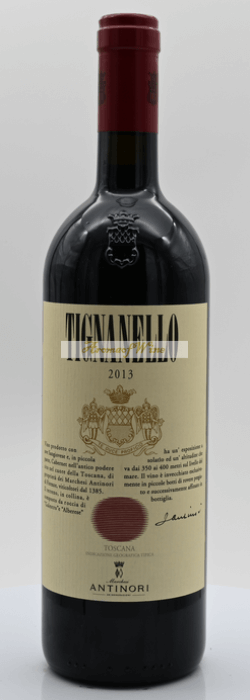
Tignanello is truly an iconic wine, its origins lie in a single vineyard Chianti Classico Riserva ‘Vigneto Tignanello‘ made for the 1970 vintage. Even at this point it broke new ground by being the first Sangiovese aged in small oak barrels, and the die was cast from the 1971 vintage, when it became a Vino da Tavola della Toscana and was named Tignanello after the vineyard from where the fruit originates. Over the following eleven years Tignanello gradually evolved into the wine we recognise today – a wine that no longer follows the rules laid down by Chianti Classico Disciplinare; A blend of 80% Sangiovese, 15% Cabernet Sauvignon and 5% Cabernet Franc that is produced only in the finest vintages.It is powerful and seductive, notes of black cherry, blackcurrant, liquorice wood, spices and peat moss. Tignanello has quickly grown excitement into Italy’s top wines and in particular the super Tuscan wines has become insatiable.
Wine Profile
Region
:
Tuscany
Classification
:
DOC
Appellation
:
Tuscany
LWIN
:
1095391
Robert Parker Wine Advocate
The 2015 Tignanello is a wine that opens, like a fully blossomed rose, right in front of you. This vintage is immediately accessible, generous and opulent. The wine will surely flesh out and gain focus with more bottle age, but one of the best qualities of this vintage is just how beautiful the wine tastes straight out of the gate. The fruit is beautifully ripe with fresh blackberry and cherry nuances, spice, leather, sweet tobacco and smoke. Up until this vintage, the various blending components that make up Tignanello were vinifed in separate lots. Starting with 2015, the wine is blended sooner in order to achieve better overall integration. The entire Tignanello estate counts 130 hectares of vines, but the single-vineyard "Tignanello" that makes this wine is 57 hectares. Some 340,000 bottles were produced.
Fantastic aromas of dark berries, sandalwood and Spanish cedar that are ever so deep. Full body, an incredible spin of polished tannins and bright acidity. Incredible depth. Like looking over the edge of a skyscraper. Powerful and structured. A great Tignanello. A little more sangiovese than usual. Best since the legendary 1997?
Once again, the 2015 Tignanello is stunning. Sweet, floral notes give the 2015 striking aromatic intensity to play off a core of red Sangiovese fruit. In 2015, the Sangiovese is a bit higher than the norm, which comes through in the wine's flavor profile. The tannins are also a bit biting at this stage, but that won't be an issue in time. Bright red cherry, plum, blood orange mint and sweet floral notes build into a finish laced with energy and tension. The 2015 is utterly captivating. That's all there is to it.
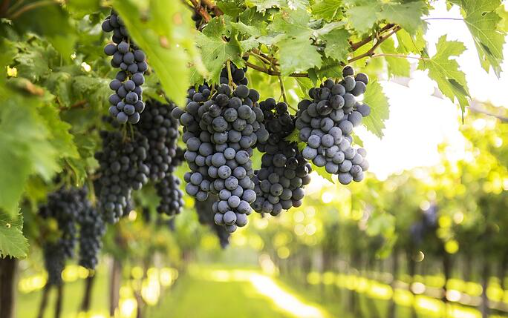
Cherry, plum, strawberry, herbs, and tomatoAs one of the most famous Italian grapes, Sangiovese sits on throne of the grape kingdom. The number of synonyms and clones that this charmer of a grape counts is many, which is why Sangiovese produces wines that can be quite diverse in taste.Sangiovese is internationally famous for its Tuscan darlings: Chianti, Vino Nobile and last but certainly not least, Brunello de Montalcino. Often referred to as one of Italy’s three great B’s, alongside Barolo and Barbaresco, Brunello wines are complex and powerful with high tannins, dusty minerals, and bitter-c
About this WINE
The Producer
Marchesi
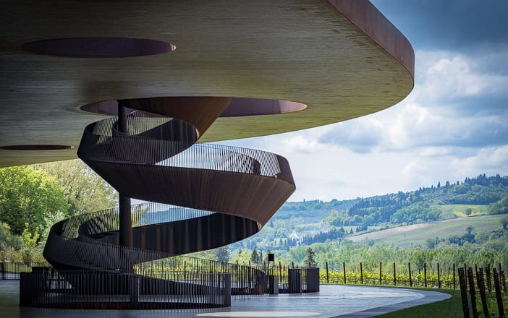
Antinori Srl is
an Italian wine company that can trace its history back to 1385. They are one of the biggest wine companies in
Italy, and their innovations played a large part in the "Super-Tuscan"
revolution of the 1970s.Antinori is a
member of the Primum Familiae Vini and the 10th oldest family
owned company in the world.
Rinuccio di Antinoro is recorded as making
wine at the Castello di Combiate near the Tuscan town of Calenzano in
1180. The castello was destroyed in 1202, and the family moved to Florence,
where they were involved in silk weaving and banking. In 1385,...
Marchesi
Antinori Srl is
an Italian wine company that can trace its history back to 1385. They are one of the biggest wine companies in
Italy, and their innovations played a large part in the "Super-Tuscan"
revolution of the 1970s.Antinori is a
member of the Primum Familiae Vini and the 10th oldest family
owned company in the world.
Rinuccio di Antinoro is recorded as making
wine at the Castello di Combiate near the Tuscan town of Calenzano in
1180. The castello was destroyed in 1202, and the family moved to Florence,
where they were involved in silk weaving and banking. In 1385,
Giovanni di Piero Antinori joined the Guild of Winemakers, and this is the date
usually taken as the start of the wine business.
The fame of
their wine expanded over the years, to the extent that in 1506 they could
afford to pay 4,000 florins for the Palazzo Antinori, built for
the Boni family in the 1460s. At this time, Alessandro Antinori was one of the
richest men in Florence, but like many Florentines he was soon bankrupted by
the ravages of Charles V of Spain and the economic effect of his New
World gold. Nonetheless the family prospered in the ensuing peace and gained
the title of Marquis from the House of Habsburg-Lorraine in the 18th
century.
In 1900, Piero
Antinori bought several vineyards in the Chianti Classico region,
including 47 hectares at Tignanello. His son Niccolò scandalised Tuscany in
1924 by making a Chianti containing Bordeaux wine varieties. He
continued to experiment over the following years, with new blends, types of
barrel, temperature control and bottle ageing. Niccolò retired in 1966, to
be replaced by his son Piero who was even more innovative. He investigated
early harvesting of white grapes, different types of barrique, stainless
steel vats and malolactic fermentation of red wines.
The real
revolution came in 1974 with the launch of Tignanello's first vintage, 1971: a
barrique-aged wine from the vineyard bearing the same name containing Cabernet
Sauvignon and Cabernet Franc. Although the initial blend did not yet
contain any Cabernet Sauvignon or Cabernet Franc, no white grape varieties were
used, which meant that the wine was ineligible for the Chianti Classico
appellation; from the vintage 1975 onwards the blend contained Cabernet
Sauvignon. Technically Tignanello was not the first 'Super Tuscan' – that
honour goes to Sassicaia, created by a relative of the
Antinoris, the Marquis Mario Incisa della Rocchetta – even though the Antinoris
were experimenting with Cabernet blends since the 1920s. But it was Tignanello
that really shook up the Italian wine industry, leading to far-reaching changes
in rules and attitudes. However, even though the Chianti Classico DOCG rules
have now been changed to accommodate wines such as Tignanello, the Antinoris
continue to sell it as a Toscana IGT wine. Emboldened by the success
of the 20% Bordeaux blend Tignanello, in 1978 Antinori launched Solaia -
containing 80% Cabernet Sauvignon - from the neighbouring vineyard.
Antinori
responded to the inflation of the 1980s and 1990s with a frantic programme of
investment in wineries and vineyards, most notably the Atlas Peak winery in
California in 1985, and 325 hectares around Badia a Passignano in 1987. They
also expanded into Piedmont and Apulia, and set up joint
ventures in Bátaapáti, Hungary, Stag's Leap and Col Solare in the USA, Malta, Romania, and Chile.
Vineyards and wines
·
Tignanello - is a 47 hectare
vineyard acquired in 1900 and gives its name to Antinori's most famous wine,
designated a Vino da Tavola since the mid-1970s and IGT Toscana since the early
1990s. Since 1982, Tignanello has been made from 85% Sangiovese, 10% Cabernet
Sauvignon and 5% Cabernet Franc. The vineyard lies at 1150–1312 feet
above sea level, within the Santa Cristina estate (also known as Tenuta
Tignanello).
·
Solaia - 'The sunny one' is a 10 hectare
vineyard adjacent to Tignanello in the Mercatale Val di Pesa zone of Chianti
Classico. The eponymous wine was released in 1978 as an 80% Cabernet Sauvignon,
20% Cabernet Franc blend, although that has now evolved to a mix of 75%
Cabernet Sauvignon, 5% Cabernet Franc, 20% Sangiovese.[3] Like Tignanello, fruit not used for the grand
vin goes into Antinori's Chianti Classico Riserva, Tenute del Marchese and the
IGT Villa Antinori (60% Sangiovese, 20% Cabernet Sauvignon, 15% Merlot and 5%
Syrah).[4]
·
Pèppoli Estate - Close to Tignanello,
55ha of the 100ha of the Peppoli estate are planted with vines. The slopes face
northeast, but the unique microclimate of the valley produces a
fruity Pèppoli Chianti Classico and contributes to Marchese Antinori.
·
Badia a Passignano - The Antinoris bought
the 325 hectare estate around the historic Vallombrosian abbey in 1987,
including the right to use the abbey's cellars. Fifty hectares are planted with
Sangiovese from Tignanello[4] which provides the grapes for another Chianti
Classico DOCG Riserva, Badia a Passignano. Piero Antinori regards this as his
testbed for the ultimate expression of Sangiovese in Tuscany[5] Some grapes go into Marchese Antinori.
·
Guado al Tasso - A massive estate of 900
hectares in the Bolgheri bowl, 60 miles SW of Florence, at just
150–200 feet above sea level. A third of it is planted with vines, mostly
Sangiovese, Cabernet, Merlot and Syrah, grapes here ripen two weeks before the
Chianti holdings. The best known wines are Guado al Tasso, the Scalabrone rose,
Il Bruciato and Vermentino. Matarocchio is a lesser-known and rarer expression
of 100% Cabernet Franc.
·
La Braccesca estate - Vino Nobile di
Montepulciano La Braccesca, Vigneto Santa Pia, Sabazio, and the Bramasole and
Achelo Syrahs.
·
Pian delle Vigne Estate - Sixty hectares
of vineyard in a 186 hectare estate bought in 1995, which provides their
Brunello di Montalcino.
·
Fattoria Aldobrandesca - Aleatico comes
from this Etruscan vineyard near Sovana in Southern Tuscany.
·
Monteloro Estate - North of Florence,
supplies the white wines Villa Antinori Bianco and Capsula Viola.
·
Castello
della Sala - 500 hectare estate with 160 hectares of vineyard producing Orvieto
Classico, Campogrande and Casasole, a Pinot Nero, the Chardonnay-based Cervaro
della Sala, and the Sauvignon Blanc-based sweet Muffato della Sala.
·
Antica
Napa Valley - Antinori's wine estate in Napa, California. Produces Cabernet
Sauvignon, Chardonnay, Sangiovese, Sauvignon Blanc, Pinot Noir, and Cabernet
Franc on 600 planted acres in Atlas Peak AVA.
The Region
The rolling hills of Tuscany are alive with endless rows of vines. In fact, wine is produced over most of the territory in this region of central Italy. The passion, gusto, and delightful flavours of the wine is directly related to the heart and soul of this beautiful land full of myths and legends. However, it's history much more interesting.The wine of Tuscany is cultivated with great passion in Chianti, the hills around Montalcino, the vineyards of San Gimignano and the Lucchesia. Vines grown in the Livorno Hills and the Maremma near the coast carry strong sea notes. Those in the Sienese co...
The rolling hills of Tuscany are alive with endless rows of vines. In fact, wine is produced over most of the territory in this region of central Italy. The passion, gusto, and delightful flavours of the wine is directly related to the heart and soul of this beautiful land full of myths and legends. However, it's history much more interesting.The wine of Tuscany is cultivated with great passion in Chianti, the hills around Montalcino, the vineyards of San Gimignano and the Lucchesia. Vines grown in the Livorno Hills and the Maremma near the coast carry strong sea notes. Those in the Sienese countryside taste of the warmth of the sun combined with the richness of the soil.Giacomo Tachis, Italian wine expert, and creator of the Sassicaia wine describes the Tuscan vineyards with passion. “Here there is light, the sun. Radiant sunlight and the right soil are the soul of wine. But the tradition of the countryside and the memory of men are the solid basis of the extraordinary Tuscan wine culture.”From antiquity, the fruit of the vine has been highly esteemed. Gilgamesh, an ancient Sumerian king, was certain that the secret of immortality could be found in the grapevine. It was during this time that the vines of Tuscany were planted along the sea in Maremma and the coastal regions south of Livorno. It was here that the cradle of Tuscan wines began.The Sangiovese grapevine emerged in the Sienese hills during the early 1700’s. This was to be the first step leading to Chianti, the historic area of central Tuscany known for its great red wines. It is a triangle of land that lies between Greve, Radda, Castellina, and Gaiole. Chianti wine became so important to The Sienese economy and Florentine region that by 1903 an association was formed to protect its quality. In 1931, the boundaries of Chianti vineyards were established.Historian Zeffiro Ciuffoletti sums up the development of Tuscan wine perfectly. “Tuscany, as regards wines, has no equal the world over, thanks to a most felicitous nature, and to a civilization of the grapevine and of wine that has been decanted and refined over the centuries.”